
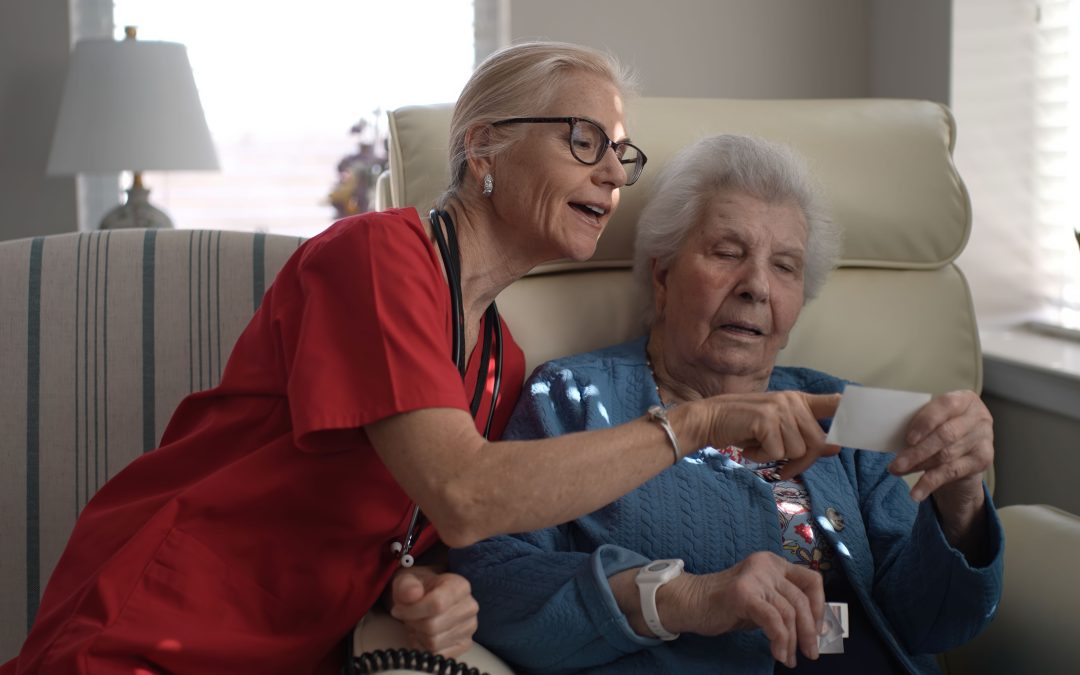
When a loved one with dementia reaches a point where their care needs surpass your ability to provide, it may be time to consider a memory care community. This decision can be prompted by any number of circumstances; your own health demands, time constraints, a need for a different care plan, or a desire for a relationship with the patient beyond that of the caregiver role.
Care for individuals with dementia and Alzheimer’s disease spans from assisted living in the early stages, where personalized care is less of a factor, to the need for ongoing memory care in mid-to-late stages. The following questions can help guide and focus your search for the right memory care community in Centerville, MN.
1. Leadership and Operations:
Your tour will likely be with the marketing and sales director, but be sure to also speak with the executive director. You’ll want to ask about family involvement, the process for resolving issues, staff training and certifications, COVID-19 and other safety policies, and resident security measures.
2. Size and Layout:
Consider the number of resident rooms, their size (private or shared), the number of dining areas, and the availability of indoor and outdoor activity spaces. These factors will directly influence the quality of life your loved one experiences.
3. Medical Care Provision:
Most memory care communities have at least one registered nurse or licensed nurse practitioner on site twenty four hours a day, seven days a week. Engage with the nursing staff and medical director before making a decision to understand their level of interaction with family members. Are they good at their jobs? Do they seem compassionate and thorough?
4. Staff-Resident Interaction:
All staff should be trained in dementia care. A common caregiver-to-resident ratio is 1:5 or 1:6, though this can vary. Some facilities assign residents to the same caregiver daily. Inquire about how caregivers are trained to manage dementia behaviors, particularly distress, anger, and aggression, and ensure you are comfortable with their approach and procedures.
5. Dining Experience:
Food is a crucial factor. Observe the menu, meal settings, along with kitchen quality and cleanliness. Meet the registered dietitian to discuss your loved one’s nutritional needs and how they will be met. Ask about alternative meal options if your loved one dislikes a particular dish; as most communities offer simpler, palatable alternatives.
6. Stimulation and Activities:
Does the facility have distinct areas for higher-functioning and lower-functioning residents? How do they encourage participation in activities? How much time do residents typically spend in their rooms? Communities that encourage residents to leave their rooms for stimulation; not having TVs in individual rooms, for example, are often beneficial. What are their health and wellness programs, if any?
7. Companion Room Availability:
If a private room isn’t available or budget is a concern, a companion room can be a good option. The executive director will thoughtfully match residents for compatibility, aiming for a positive living experience. One important consideration is whether your loved one can remain in the same room as their condition progresses, as changing rooms or surroundings can be disorienting.
8. Regulatory Compliance:
Regulation of memory care facilities is state-specific, and usually overseen by the state’s Department of Health. Search your state’s Department of Health website for a list of regulated facilities.
9. Waiting List Status:
Waiting lists are common, especially for highly-rated memory care communities. This is a key reason to begin your search when symptoms first appear. You can join waiting lists and decline an opening if you’re not ready, but you’ll want to inquire about any consequences for doing so.
10. Cost and Financial Assistance:
Many people finance memory care by selling their homes. Medicaid can help with expenses if the community accepts it and your loved one qualifies; Medicare only covers medical expenses, not living costs. A significant benefit of choosing the right community is the peace of mind you’ll gain, knowing your loved one is well-cared for and encouraged to engage comfortably by professionals experienced in dementia behaviors. This can alleviate the guilt many family members feel about not keeping their loved one at home, allowing you to focus on your relationship.
Seek Local Referrals:
Look for a local senior living placement agency in your state. These agencies specialize in community selection and can offer valuable local insights tailored to specific needs. The Alzheimer’s Foundation of America Helpline (866-232-8484) also provides information on finding senior living facilities.
Atlas Villas Memory Care offers compassionate memory care for those suffering from Alzheimer’s disease or dementia. Visit us today to find out how we can help.