Non-pharmacological management of sundowning syndrome utilizes environmental tools like circadian lighting and scent therapy, which may help support a resident’s internal biological clock. These systems may assist in stabilizing mood and easing the anxiety, confusion, and restlessness typically associated with late-afternoon dementia behaviors. By incorporating natural visual and auditory cues, senior living communities can create a calmer space for residents without relying solely on sedative medications.
Advanced environmental design offers a non-drug approach to managing dementia-related agitation.
- Circadian lighting systems mimic the natural cycle of the sun to help support sleep patterns.
- Scent therapy and sensory rooms may provide natural calming effects for residents.
- Computer-controlled environments may help reduce the triggers that lead to sundowning.
- Non-drug interventions may support cognitive well-being and daily safety.
The Biological Impact of Sundowning Syndrome
Sundowning refers to a state of increased confusion and agitation that begins in the late afternoon and lasts into the night. Biologically, this is often linked to a disruption in the circadian rhythm, the internal clock that tells the body when to be awake and when to sleep. For those with Alzheimer’s or dementia, the brain’s ability to process time through natural light cues may become impaired, leading to challenges in emotional regulation.
Traditional responses to these behaviors often involve pharmacological interventions. However, medications can have side effects like increased drowsiness. Modern memory care focuses on modifying the environment to provide the brain with clearer, more consistent signals that may help residents stay oriented to the time of day.
How Circadian Lighting Supports Sleep-Wake Cycles
Circadian lighting is a science-based approach that adjusts the color temperature and intensity of indoor light to match the outdoor sun. In the morning, the system provides cool, blue-toned light that helps promote alertness. As the day progresses, the light shifts to warmer, amber tones that encourage the natural transition to evening, signaling to the brain that it is time to wind down.
By supporting this rhythm, we help residents stay active during the day and achieve more restful sleep at night. This consistency is vital for reducing the mid-day fatigue that often triggers late-afternoon irritability and shadowing behaviors.
The Role of the Curved Sky Ceiling at Atlas Villas
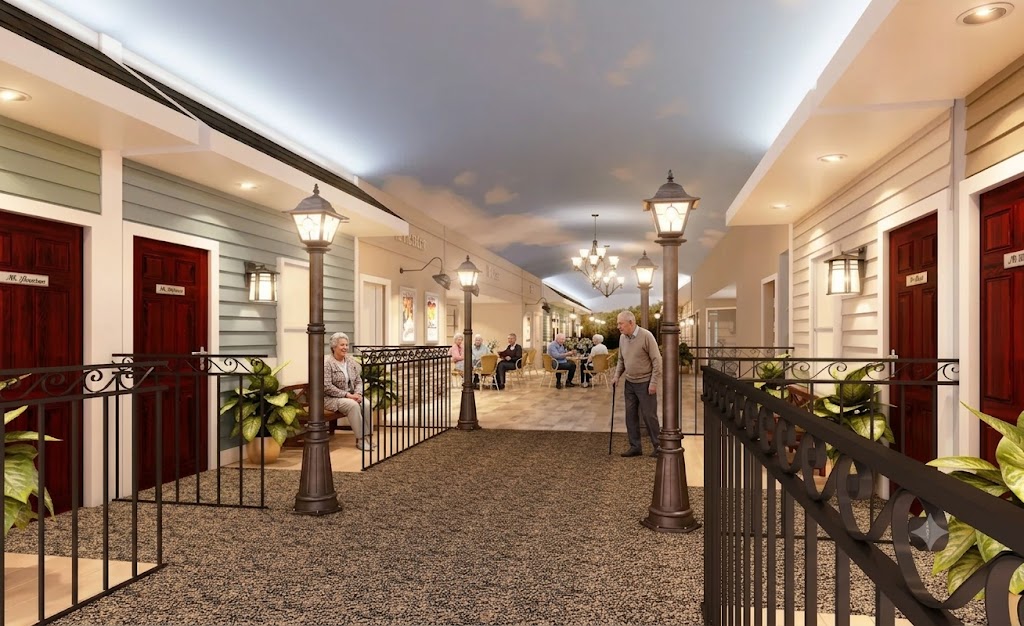
At Atlas Villas, we have integrated a specialized curved sky ceiling into our facility design. This is an environmental tool controlled by a computer system that creates a realistic simulation of the sky. This feature provides residents with constant visual orientation, even when they are indoors.
The sky ceiling uses gentle audio and visual cues to transition through sunrise, midday, and sunset. For a resident who may feel anxious in a traditional hallway, this ceiling serves as a grounding point. It provides a natural sense of the passage of time, which may lower the distress caused by the disorientation many dementia patients experience during the sunset hours.
Scent Therapy and Sensory Environments as Calming Agents
Scent is a powerful trigger for memory and emotion because the olfactory system is directly linked to the emotional center of the brain. We utilize scent therapy throughout our relaxation room to create a soothing atmosphere. Aromas like lavender and vanilla are used to help lower stress indicators and promote relaxation during peak sundowning hours.
Our relaxation room combines these scents with calming visual and audio experiences. This multi-sensory approach allows residents to self-regulate in a safe space. If a resident begins to feel overwhelmed, they can transition to this room to engage their senses in a way that may help de-escalate anxiety before it leads to a crisis.
Benefits of Technology-Driven Care and Support
While medication is sometimes necessary, an environmental-first approach focuses on addressing potential triggers like disorientation. By using computer-controlled lighting and sensory tools, we provide a proactive care model. This may support a higher quality of life, as residents can remain more alert and engaged with their families and our staff.
Furthermore, minimizing the need for heavy sedatives may help support natural balance and mobility, which are important factors in fall prevention. Families who prioritize advanced care methods often find that these environmental interventions provide a dignified and effective way to manage the daily challenges of cognitive decline.
Common Questions About Memory Care Technology
What exactly is a curved sky ceiling
It is a specialized ceiling installation that uses LED technology to simulate the natural sky. It changes colors and brightness throughout the day to help residents keep their internal clocks synced with the real world.
How does scent therapy help with dementia
Certain natural scents can trigger calm emotional responses. By using specific aromas, we may help a resident relax during times of high stress or confusion, potentially reducing the immediate need for behavioral medication.
Is circadian lighting too bright for seniors
No. The system is designed to be comfortable. It uses dimmable, soft transitions so that the lighting feels natural and never harsh, which is especially important for those with sensory sensitivities.
Why use a relaxation room
Anxiety can occur at any time. Having a dedicated space with audio and visual calming tools available around the clock ensures that residents have a place to find peace whenever they need it.
Does this technology help with sleep at night
Yes. By providing the correct light cues during the day, the body is better prepared for sleep at night, which may lead to less nighttime wandering and better rest for the resident.
Individual responses vary. Environmental interventions are used as part of a comprehensive care plan developed in coordination with each resident’s healthcare providers.
Leveraging the latest advancements in circadian lighting and sensory design allows us to provide a high standard of safety and comfort. At Atlas Villas, we believe that an innovative environment supports a higher quality of care. By addressing the environmental triggers of sundowning through our sky ceiling and scent therapy, we help our residents maintain a peaceful and predictable daily rhythm.
By: Atlas Villas Management Last Updated: July 16, 2026 Atlas Villas Memory Care integrates state-of-the-art lighting and sensory technology into a boutique 16-room setting in Centerville, MN